
What is the 'Crucible Curse'? A timeline explaining snooker's most famous hoodoo

We explain what the ‘Crucible Curse’ is and all the players who have fallen victim to it throughout World Snooker Championship history in Sheffield.
No first-time winner of the World Snooker Championship at the iconic Crucible Theatre in Sheffield has come back the following year and successfully defended the title. This is known as the ‘Crucible Curse’.
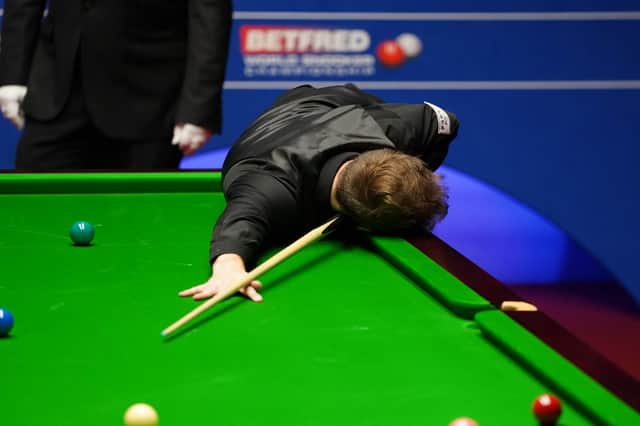

The sport’s most famous hoodoo, the ‘Curse’ is more than 47 years undefeated. In total, since 1978, 23 maiden champions at the venue have aimed to go back-to-back, and they’ve all failed to do so.
Amongst that group of players are several of snooker’s undisputed all-time greats. Taking into consideration the dominant spells of form that some of them were in when they headed back to South Yorkshire, it is a little perplexing how the hex is still to be broken. Having said that, only four players have won consecutive Crucible crowns in any circumstance.
Here is a timeline of all the players who were cast under its spell!
1978: John Spencer (lost in the first round)
John Spencer was the first Crucible champion in 1977; his third world title overall.
The holder returned 12 months later but lost his opening match to qualifier Perrie Mans, 13-8. South African Mans went on to reach the final.
Spencer’s early exit was a shock. In a tournament preview for the Guardian newspaper, snooker journalist Clive Everton wrote: “Spencer, the champion, lost to Perrie Mans in 1974, but should not do so again.”
And that’s when the ‘Crucible Curse’ was born.
1979: Ray Reardon (lost in the quarter-finals)
The best player of the 1970s, Ray Reardon won his sixth world title – and his first at the Crucible - in 1978.
A 2/1 tournament favourite for a seventh world crown in 1979, the Welshman defeated qualifier Graham Miles 13-8 in his opening match but went out to eventual runner-up Dennis Taylor 13-8 in the quarter-finals (the main draw featured 16 players at the time).
1980: Terry Griffiths (lost in the second round, his first match of the event)
During his rookie professional season, Terry Griffiths became the first qualifier to triumph at the Crucible in 1979.
The Welshman performed excellently during his season as the world champ, living up to new expectations by winning the Masters, and only losing out on the UK Championship title by a deciding frame in the final.
However, Griffiths’ world title defence was troublesome from the off as he fell 7-0 and 10-3 down to a young Steve Davis in his opening match. Griffiths battled back to 10-10, but Davis got over the line 13-10 to dump out the holder.
(In 1980, there was a 24-player main draw in Sheffield. Griffiths was seeded through to the last 16 although qualifier Davis had already defeated Patsy Fagan in round one).
1981: Cliff Thorburn (lost in the semi-finals)
The Crucible’s first non-UK champion Cliff Thorburn made a strong start to his title defence as he relinquished only eight frames in his opening two wins against Graham Miles and David Taylor.
But the Canadian’s reign was ended by Steve Davis, 16-10, in the last four. Davis went on to record the first of his six world championship glories, although one of those wouldn’t come the following year...
1982: Steve Davis (lost in round one)
Steve Davis enjoyed a hugely successful campaign as a maiden world champion, winning six titles including both the UK and Masters, meaning he held all three Triple Crown accolades at the same time - the first cueist to do so.
Davis was the dominant force on the green baize, and his pre-tournament odds of 2/5 on represented that.
However, the Crucible Curse cooked – well, Tony Knowles did to be exact – as the Bolton-based qualifier shocked his opponent and the sporting world with a crushing 10-1 opening round win; one of the most famous results in snooker history.
The solitary frame that Davis mustered equates to the worst first-time title defence in world championship history. Between 1981 to 1989, though, it was one of only three defeats he experienced at the venue.
1983: Alex Higgins (lost in the semi-finals)
Following joyous and emotional scenes 12 months earlier on the Crucible stage, Alex Higgins returned to Sheffield attempting to go back-to-back and complete a hat-trick of world wins.
The Northern Irishman - who was a frame away from winning the UK Championship a few months before - put up a solid title defence, defeating Dean Reynolds, Willie Thorne and Bill Werbeniuk to reach the final four, but his crown was removed by eventual winner Steve Davis, 16-5.
1986: Dennis Taylor (lost in round one)
Dennis Taylor emerged from snooker’s most revered match in 1985 with his black ball, deciding frame triumph.
Returning to the scene of those historic moments a year later, Taylor quickly found himself in trouble in his opening round match against qualifier Mike Hallett.
Just like the ‘85 final, he fell 7-0 behind. Taylor rallied, threatening another unlikely comeback as he closed to within two of his opponent at 8-6 down before Hallett crossed the line, 10-8. The result was Hallett’s first match success at the Crucible having lost in the opening round in each of the four previous years.
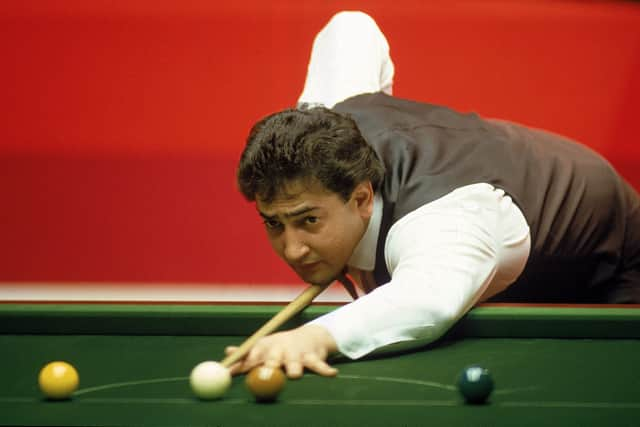
1987: Joe Johnson (lost in the final)
Joe Johnson remains the player who has gone the closest to breaking the Crucible Curse following a gallant effort to retain his crown in 1987.
A 150/1 longshot champion in Sheffield a year before, the Bradford-based star was within just four frames of a remarkable double as he reached the final again.
The reigning champ survived deciding frame finishes in the opening round, and to a young Stephen Hendry in the last eight, but it was world number one Steve Davis who ended Johnson’s winning streak with an 18-14 win. Davis turning the tables having lost to Johnson in the ‘86 final.
1991: Stephen Hendry (lost in the quarter-finals)
World number one Stephen Hendry was a hot favourite to successfully defend the world title in 1991. The Scottish star was already taking snooker to new heights, winning a record five ranking titles during the 1990/91 season - including the UK Championship. He also won the invitational Masters.
It was all going to plan for Hendry on his Crucible return as he dispatched both Warren King and Alain Robidoux in the opening rounds with change to spare.
In the quarter-finals, though, Hendry couldn’t break free from the charasmatic and resilient Steve James, who kept catching him up throughout the tie. And come the business end of proceedings, number nine seed James pounced, claiming the final four frames from 11-9 down to record a famous 13-11 victory.
1992: John Parrott (lost in the quarter-finals)
The only Crucible champion other than Stephen Hendry between 1990 to 1996, John Parrott returned to Sheffield at the end of a fine campaign that saw him win the UK Championship and make the final of the Masters.
Parrott began his world title defence with an historic result, defeating the experienced Eddie Charlton 10-0 in round one - the venue’s first whitewash.
He comfortably prevailed against Tony Knowles 13-4 in the last 16 but lost 13-12 in a quarter-final thriller to Alan McManus.
1998: Ken Doherty (lost in the final)
Ken Doherty was the player to stop Stephen Hendry’s sensational five-year, 29-match world championship winning streak in the 1997 final.
Doherty gave it a great go trying to retain his title, becoming only the second first-time reigning Crucible champ to make the final again.
The popular Irishman turned around a 12-8 deficit to defeat Mark Williams 17-14 in the semi-finals, but he was unable to overhaul John Higgins in the title contest as the challenger won 18-12.
1999: John Higgins (lost in the semi-finals)
John Higgins secured both the world title and world number one spot for the first time in his career after his heroics in spring 1998.
If expectations of his new status laid heavy on his shoulders, it didn’t show during the 1998/99 term as he collected both the UK and Masters titles, meaning he completed a Career Triple Crown, and held all three majors at once.
The Crucible Curse doesn’t care about form, though. Despite navigating his opening three Sheffield assignments with a frame aggregate of 36-12, Higgins lost 17-10 to Mark Williams in the semi-finals, having been 8-7 up.
2001: Mark Williams (lost in round two)
Mark Williams completed his Career Triple Crown when he became the first world snooker champion of the new millennium in 2000.
The Welshman’s title defence began with a 10-4 win over qualifier Billy Snaddon, and it looked like a quarter-final date was on the cards as he led Joe Swail 10-6 going into the final session of their last 16 encounter.
However, a determined Swail - known for his comebacks - rallied from 11-7 down, chalking up five of the final six frames in a dramatic 13-12 win.
2002: Ronnie O'Sullivan (lost in the semi-finals)
Ronnie O’Sullivan headed into his maiden world championship title defence as the bookmakers’ favourite to lift the trophy.
O’Sullivan had a solid season as a first-time world champion, during which he won a third UK Championship crown. ‘The Rocket’ was comfortable in negotiating his opening two matches in Sheffield, but needed to graft in order to dismiss Stephen Lee 13-10 in the last eight.
Before a whopper of a semi-final showdown with Stephen Hendry, O’Sullivan added extra heat to the duel by launching a broadside on the seven-time world champion in relation to a ‘foul and a miss’ incident in their last four meeting at the Crucible three years earlier. O’Sullivan said he had ‘no respect’ for his opponent, and that he wanted to ‘send him home to Scotland and his sad little life’.
If this was an attempt to unsettle Hendry, it didn't work, as the Scot registered five century breaks in a 17-13 win to smash O'Sullivan's dream of overcoming the Crucible Curse. At the time, it meant Hendry had triumphed in all three of their head-to-head meetings in Sheffield.
O’Sullivan subsequently apologised to Hendry about his comments and has expressed regret at the verbal attack.
2003: Peter Ebdon (lost in the quarter-finals)
At the time of writing, Peter Ebdon won the last world championship final that went down to a deciding frame when he denied Stephen Hendry a record-extending eighth accolade in 2002.
On his return to the venue with the silverware, Ebdon navigated his opening two rounds with the loss of only eight frames but bowed out to Paul Hunter, 13-12, in the quarter-finals.
2006: Shaun Murphy (lost in the quarter-finals)
Shaun Murphy became only the second qualifier to lift the trophy at the Crucible Theatre, in 2005. He began that event 150/1 with bookmakers, and as the world number 48.
With attention on him like never before, Murphy acquitted himself well 12 months later with two comfortable victories to start with before Peter Ebdon - who was now dishing out the Curse instead of suffering it himself - dethroned him 13-7 in the last eight.
2007: Graeme Dott (lost in round one)
Despite being runner-up two years before, Dott was an unlikely winner of the 2006 World Championship, with the win representing his first ranking title.
Only a few weeks before the start of his defence, Dott claimed his second ranking title at the China Open to install very decent hopes that he could have another run on the Sheffield stage. However, he exited the tournament at the first avenue, as qualifier Ian McCulloch defeated him 10-7 on the opening day.
2011: Neil Robertson (lost in round one)
The first Australian to conquer the Crucible, Neil Robertson won the World Open near the start of the following season, but had a quiet second half to the term.
In a blockbuster first round clash in Sheffield, Robertson met the new kid on the block Judd Trump, who was on a massive high having recorded his maiden ranking event success at the China Open just a few weeks before.
Trump was a qualifier, and this was only his second appearance on snooker’s biggest stage, but the match was a tough one to call, and it was Trump who dealt out the Curse with an engrossing 10-8 win. Robertson went home and Trump went on to the final.
2015: Mark Selby (lost in round two)
Mark Selby denied Ronnie O’Sullivan a third successive world title after a big recovery in the 2014 final.
Shortly before his Crucible defence, Selby played himself into very fine nick by winning the China Open - the final stop before the worlds.
After surviving a comeback against debutant Kurt Maflin in round one by going through after a deciding frame, Selby came unstuck in the last 16 when he was eliminated by Anthony McGill - another debutant - 13-9 in the last 16.
2016: Stuart Bingham (lost in round one)
Rated at odds of 50/1 before a ball was struck, Stuart Bingham realised his snooker dream in 2015 when he triumphed in Sheffield, becoming the oldest first-time Crucible champion in the process at 38-years-old.
Bingham endured a frustrating season whilst wearing the crown but went back to South Yorkshire with some decent form having reached the final of the World Grand Prix a few weeks before.
However, given a tough opening round appointment with two-time runner-up Ali Carter, Bingham became the seventh maiden Crucible champion to lose their first match coming back, as the qualifier went through in a deciding frame, 10-9.
2020: Judd Trump (lost in the quarter-finals)
Another example of how the formbook can go out of the window for maiden world champions came in 2020 when Judd Trump arrived as the 5/2 tournament favourite with bookmakers.
World number one Trump won a record-breaking six ranking titles during the 2019/20 season, although due to the Covid-19 Pandemic and lockdowns, he may have lost some momentum as the end of the season was delayed until the summer.
Trump had to work hard getting past Tom Ford in the opening round, coming back from 5-2 down to win 10-8. He also recovered from the same scoreline in the last 16 to usurp Yan Bingtao, 13-11.
Kyren Wilson, though, was the one to end his defence ambition in the quarter-finals with a 13-9 victory.
2024: Luca Brecel (lost in round one)
Having never won a match at the venue before, Luca Brecel memorably won it all at the Crucible in 2023, defeating three multiple-time world champions and conjuring up the biggest comeback ever seen there (numerically, anyway) on his way to the title in swashbuckling fashion.
The Belgian’s season with the world crown had been a largely disappointing one, although he did reach the final of two invitational events, and won the World Mixed Doubles title alongside Reanne Evans.
Against a former world semi-finalist David Gilbert in round one on his return to the Crucible, despite being under-the-weather, Brecel was fluent and looked sharp amongst the balls in the opening session as he went 6-3 up.
On resumption in the evening, he extended his lead to four, but the tie became disjointed and there were signs that the champion was unravelling. From 9-6 ahead, Brecel squandered golden opportunities to get the match won, and Gilbert stepped in to punish, recording a famous 10-9 comeback win on the opening day.
2025: Kyren Wilson (lost in round one)
For the second successive year, the maiden Crucible champion was the first player to forced to leave the party, although Wilson’s early elimination was a far bigger surprise than Brecel’s.
Wilson thrived whilst wearing the world crown, enjoying a brilliant follow-up season during which he won four ranking titles, and made the final of two invitational events - one being the Masters.
But again, that sort of run-in can count for nothing in Sheffield, as Wilson was stunned by qualifier and debutant Lei Peifan in round one.
Having looked comfortable at 6-2 ahead, Wilson then watched his opponent string together seven frames in-a-row to move 9-6 up. Momentum shifted again as Wilson battled back with three frames of his own to take the contest all the way, but Lei regrouped, winning the decider.
18+ Be Gamble Aware